Choosing the right commercial centrifugal juicer means balancing speed, feed-chute size, cleanup time, yield, and the demands of your daily service. The models in this roundup range from compact countertop machines to heavy-duty stainless-steel extractors designed for higher-volume operation.
Use the comparison and buying advice below to narrow the field by capacity, motor power, controls, pulp handling, and overall workflow fit.
Best 10 Centrifugal Juicer Commercial Picks for 2026
Reliable Everyday Pick
Hamilton Beach Big Mouth Juicer

- 3-inch chute handles many whole produce items
- 800-watt motor for hard and soft ingredients
- Dishwasher-safe parts with three-year warranty
Best For: Home users and lighter-duty juice preparation
Heavy-Duty Service Choice
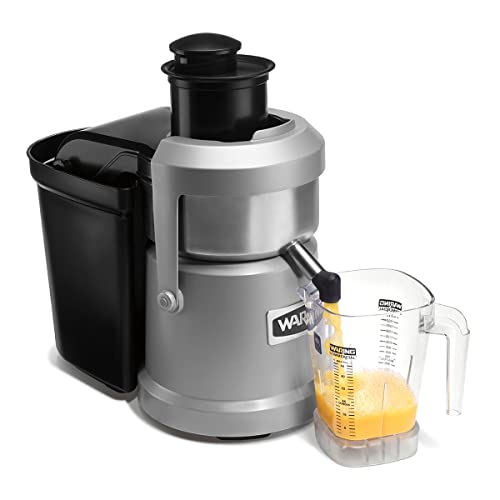
- Built for continuous, all-day extraction
- Continuous pulp ejection for high-volume workflows
- 1.2 HP motor with stainless-steel extraction components
Best For: Busy cafes, restaurants, bars, and smoothie shops
Quiet High-Capacity Option
Breville Juice Fountain Cold XL
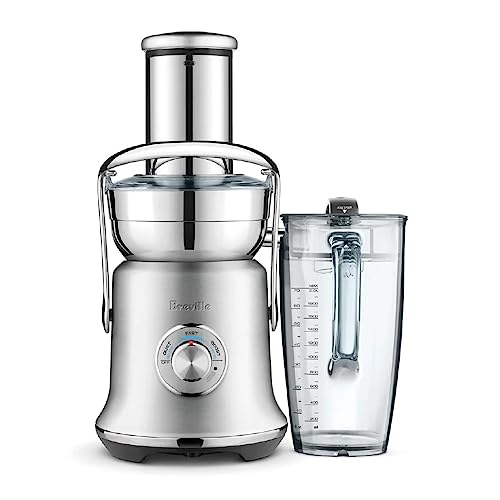
- 3.5-inch chute minimizes produce preparation
- 70-ounce jug supports larger juice batches
- Quiet setting cuts mechanical noise by 40%
Best For: Large-batch home use and quieter small-scale service
High-Output Stainless Steel Pick
Commercial 750W Juice Extractor

- Rated for 11–22 pounds of produce per minute
- Stainless-steel body resists corrosion
- Detachable net supports easier cleaning
Best For: Juice stores and foodservice using high-moisture produce
High-Throughput Pick
370W Commercial Centrifugal Juicer

- Up to 80–100 kg/hour
- Detachable net and pulp separation
- Safety and overheating protection
Best For: Busy juice shops, restaurants, and cafeterias
Power User Choice
750W Automatic Pulp-Separating Juicer

- 750W motor for continuous operation
- Processes 5–10 kg per minute
- Wide feed chute and anti-slip base
Best For: Busy juice bars, cafes, hotels, and supermarkets
Compact Heavy-Duty Option
Stainless Steel 370W Juice Extractor
- Compact 13 by 10 by 14-inch design
- Stainless steel and aluminum-alloy body
- Eight outlets with juice-and-pulp separation
Best For: Smaller commercial counters and home users
High-Output Pick
INTBUYING Commercial Juice Extractor

- 750W copper motor
- Rated for 5–10 kg per minute
- Stainless steel body; loud operation noted
Best For: High-volume juice preparation
Quiet Operation Pick
370W Low-Noise Commercial Juicer
- 30–40 dB listed noise level
- 2,800 RPM pure copper motor
- Automatic juice-and-residue separation
Best For: Lower-noise counter service
Versatile Service Pick
Commercial Heavy Duty Juicer Machine
- Handles fruits and vegetables
- 2,800 RPM, 370W motor
- 30–40 dB noise specification
Best For: Small businesses serving varied produce
Reliable Everyday Pick – Hamilton Beach Big Mouth Juicer
If you want a practical centrifugal juicer commercial buyers can also consider for lighter-duty foodservice or home use, this Hamilton Beach model emphasizes quick prep and straightforward cleanup. Its 3-inch chute handles whole apples and other produce, while the 800-watt motor supports both hard and soft ingredients.
Best For: Home users, small juice operations, and buyers prioritizing a wide feed chute and dishwasher-safe parts.
Pros:
- 3-inch feed chute reduces pre-cutting for many fruits and vegetables.
- 800-watt motor works with produce including apples, carrots, celery, cucumbers, citrus, and leafy greens.
- Dishwasher-safe removable parts and an included cleaning brush simplify cleanup.
- Three-year limited warranty and an 80-ounce pulp bin add practical value.
Cons:
- Its 20-ounce juice container is smaller than the batch capacity of some commercial-oriented models.
- Single-speed operation offers less control than variable-speed juicers.
- Plastic construction may be less suited to intensive all-day commercial use.
The Hamilton Beach is a sensible centrifugal juicer commercial alternative when ease of use, a generous chute, and simple maintenance matter more than maximum throughput. For continuous service, consider a heavier-duty commercial extractor.
Heavy-Duty Service Choice – Waring Commercial WJX80
Waring Commercial Waring Products WJX80 120V 1.2HP HD Pulp Eject Juice Extractor, Stainless steel
Check Price On AmazonFor buyers specifically comparing centrifugal juicer commercial equipment, the Waring WJX80 is designed around continuous, high-volume extraction. Its 1.2-horsepower motor, continuous pulp ejection, and stainless-steel filter basket make it a stronger fit for busy beverage operations.
Best For: Smoothie shops, cafes, bars, restaurants, hotels, and healthcare facilities needing all-day juice extraction.
Pros:
- Heavy-duty design is built for continuous juice extraction.
- Continuous pulp ejection supports higher-volume workflows.
- Stainless-steel filter basket and shredder disc are designed for juice yield and waste reduction.
- Dishwasher-safe parts and an included cleaning brush help with maintenance.
Cons:
- At 17 pounds and 20 inches tall, it requires substantial counter space.
- Parts and labor coverage lasts one year, while the motor warranty lasts two years.
- The product notes specify hand washing, so cleanup may require more attention than fully dishwasher-friendly models.
The WJX80 stands out when throughput and durability are central purchasing criteria. Its larger footprint and hand-wash care requirements are reasonable trade-offs for a commercial extractor intended to keep pace with frequent service.
Quiet High-Capacity Option – Breville Juice Fountain Cold XL
The Breville Juice Fountain Cold XL is a useful centrifugal juicer commercial contender for operations or households that value batch capacity, reduced noise, and minimal produce preparation. Its 3.5-inch chute accommodates whole fruits and vegetables, while the 70-fluid-ounce jug supports larger servings.
Best For: Family kitchens, wellness-focused beverage prep, and smaller service settings that want a quieter, high-capacity centrifugal juicer.
Pros:
- 3.5-inch feed chute helps process whole apples, carrots, and oranges without pre-cutting.
- 1,200-watt motor and fast settings support rapid extraction.
- Cold Spin Technology and an Italian-made precision mesh filter are designed to limit heat exposure.
- Quiet setting reduces mechanical noise by 40%, and the 70-ounce seal-and-store jug supports batch preparation.
Cons:
- One-year limited warranty is shorter than the coverage supplied with some competing models.
- Hand-wash care may make cleanup more involved.
- Its listed recommended uses are narrower than those of some commercial extractors.
Choose the Breville when a large jug, wide chute, and quieter operation are important. It offers strong convenience features, though buyers planning true all-day commercial production may prefer a purpose-built heavy-duty machine.
High-Output Stainless Steel Pick – Commercial 750W Juice Extractor
This stainless-steel centrifugal juicer commercial machine is aimed at buyers who need a high stated output for juice stores, restaurants, hotels, or family use. Its 750-watt motor is rated for 11 to 22 pounds of produce per minute, with a detachable juicing net for cleaning.
Best For: Juice stores and foodservice settings seeking a high-output stainless-steel extractor for suitable high-moisture produce.
Pros:
- Rated output of 11 to 22 pounds per minute supports fast production.
- Stainless-steel construction is designed for durability and corrosion resistance.
- Detachable juicing net and a water-rinse cleaning process simplify routine maintenance.
- Can process carrots, celery, tomatoes, pears, grapes, pineapples, watermelon, cantaloupe, and lemons.
Cons:
- At 66 pounds, it is considerably heavier than the other listed options.
- It cannot process fruits with cores, such as peaches and mangoes.
- Low-moisture produce and root vegetables may clog the machine and require frequent cleaning.
The machine’s standout advantage is its stated throughput, but that performance depends on using appropriate produce and maintaining the juicing net. It is best suited to buyers who can accommodate its weight and follow the specified cleaning routine.
High-Throughput Pick – 370W Commercial Centrifugal Juicer
For buyers seeking a centrifugal juicer commercial setup with straightforward operation, this 370W extractor is designed for fruits and vegetables such as apples, carrots, celery, pears, oranges, and grapes. Its stated output is up to 80–100 kg per hour, making it suited to busy service environments while remaining compact enough for some home uses.
Best For: Juice shops, restaurants, cafeterias, hotels, and high-volume home juicing where clear juice and a compact footprint matter.
Pros:
- Rated for up to 80–100 kg of produce per hour.
- Food-grade stainless steel and aluminum-alloy construction.
- Detachable juicing net, automatic pulp separation, and eight juice outlets.
- Safety-start and overheating protection features.
Cons:
- Not suitable for fruits with hard cores.
- Hand-wash care is specified.
- Uses a 110V power supply.
Its combination of high stated throughput, detachable components, and safety features makes it a practical option for produce-heavy operations. Verify that your menu avoids hard-core fruit and that a 110V outlet is available.
Power User Choice – 750W Automatic Pulp-Separating Juicer
This 750W centrifugal juicer commercial machine is built for continuous service in restaurants, hotels, juice bars, cafes, and similar settings. It processes a stated 5–10 kg of produce per minute, with automatic pulp separation, a wide feed opening, and a stainless steel construction aimed at frequent use.
Best For: Commercial operations that need higher motor power, continuous juicing, and automatic separation for a broad range of fruits and vegetables.
Pros:
- 750W copper motor with stated processing of 5–10 kg per minute.
- Automatic juice and residue separation through separate outlets.
- Wide circular feed chute and included food-grade push rod.
- Weighted anti-slip base and secure locking catch help stabilize operation.
Cons:
- Large and heavy at 59.5 pounds and approximately 16.14 by 16.14 by 18.9 inches.
- Not suitable for pitted fruit, bananas, or coconuts.
- The filter may need periodic cleaning when processing fibrous ingredients.
This is the strongest fit of the three for demanding, ongoing service because of its higher wattage and stated processing rate. Its larger footprint and ingredient restrictions should be checked before purchase.
Compact Heavy-Duty Option – Stainless Steel 370W Juice Extractor
For a centrifugal juicer commercial buyer prioritizing a smaller machine, this 370W stainless steel and aluminum-alloy extractor offers automatic juice-and-pulp separation and flexible outlet positioning. Its approximately 13 by 10 by 14-inch dimensions make it more compact than many commercial-style alternatives.
Best For: Smaller juice shops, restaurants, cafeterias, hotels, and home users who want a sturdy centrifugal extractor with a relatively compact footprint.
Pros:
- Stainless steel and aluminum-alloy construction for durability.
- Eight juice outlets allow flexible positioning.
- Separates juice from dregs during extraction.
- Compact dimensions and portable design.
Cons:
- Its 370W motor is less powerful than the 750W model in this roundup.
- The supplied notes do not state a processing rate.
- Requires corded electric power at 110V/60Hz.
This model is a sensible space-conscious choice when durable metal construction and flexible dispensing are more important than a published high-throughput rating. Buyers with very heavy daily demand may prefer a machine with a specified processing capacity.
High-Output Pick – INTBUYING Commercial Juice Extractor
If you need a centrifugal juicer commercial setup for a cafe, juice shop, restaurant, or busy household, the INTBUYING extractor emphasizes throughput. Its 750W copper motor is rated to process approximately 11–22 pounds of fruits and vegetables per minute, while the stainless steel construction is designed for straightforward maintenance.
Best For: High-volume juice preparation where output matters more than quiet operation.
Pros:
- 750W motor with a listed output of 5–10 kg per minute.
- Stainless steel construction is easy to clean and maintain.
- Separates juice from residue and supports fruits and vegetables including apples, oranges, watermelon, and pineapple.
Cons:
- The manufacturer notes that it is not silent and may produce unacceptable noise in some environments.
- At approximately 66 pounds shipping weight, it is less convenient to move than a compact countertop unit.
- Hand-wash care is specified.
This is the stronger fit when commercial-style capacity and fast processing are priorities. Confirm that your workspace can accommodate its size and noise level before buying.
Quiet Operation Pick – 370W Low-Noise Commercial Juicer
For a centrifugal juicer commercial machine that is easier to use around customers or family, this 370W model pairs a 2,800 RPM pure copper motor with automatic juice-and-residue separation. Its listed operating noise of 30–40 decibels may suit spaces where a loud extractor would be disruptive.
Best For: Cafes, counters, and home kitchens that prioritize lower operating noise and separated juice.
Pros:
- Advertised 30–40 dB operating noise.
- 2,800 RPM motor with an approximately 75% stated juice yield.
- Lock-buckle and overheating protection support safer operation.
- Food-contact areas use stainless steel, while the aluminum body helps keep the unit durable and relatively light.
Cons:
- The 370W motor has less stated power than the 750W INTBUYING model.
- The small feed chute may require more preparation of produce.
- Although listed as dishwasher safe, care details should be checked against the specific removable parts.
This model stands out for balancing commercial-oriented construction with a comparatively quiet specification. It is a practical choice when noise control is nearly as important as juice yield.
Versatile Service Pick – Commercial Heavy Duty Juicer Machine
This centrifugal juicer commercial machine is aimed at flexible use across homes, hotels, restaurants, cafes, milk tea shops, and grocery stores. Its 370W pure copper motor runs at a listed 2,800 RPM, automatically separates juice from residue, and is designed for produce ranging from apples and citrus to carrots and celery.
Best For: Small food-service businesses needing one machine for a broad mix of fruits and vegetables.
Pros:
- Supports a wide range of produce, including watermelon, pineapple, grapes, carrots, and celery.
- Automatic separation is intended to produce smoother juice with fewer rough fibers.
- Lock-buckle and overheating protection are included for safer use.
- Listed operating noise is 30–40 decibels.
Cons:
- At 370W, it is not the highest-powered option in this roundup.
- The product-care instructions specify hand washing.
- The listing uses “cold press” in the title, but the supplied features describe a 2,800 RPM centrifugal extraction system.
Its broad produce compatibility and quieter operating specification make it a versatile option for modest-volume service. Buyers should evaluate expected demand and confirm that centrifugal extraction matches their preferred juice style.
How We Picked the Best Centrifugal Juicer Commercial
We focused on practical requirements for cafés, juice bars, restaurants, catering operations, and other businesses that need fast fruit and vegetable extraction. Our evaluation criteria include motor power, expected throughput, feed-chute design, pulp-ejection method, construction materials, operating voltage, cleaning demands, and the availability of commercial-oriented features.
Because advertised capacity can vary by ingredient, preparation, and operating conditions, treat output figures as useful benchmarks rather than guaranteed results. A machine that handles your busiest ingredients consistently is generally a better choice than one with a higher claimed rate but less suitable workflow.
Quick Comparison
| Best For | What to Prioritize | Models in This Roundup |
|---|---|---|
| Small cafés and light commercial use | Simple controls, compact footprint, easy cleaning | Hamilton Beach, Breville |
| Busy juice bars | Large feed chute, powerful motor, continuous pulp handling | Waring, INTBUYING |
| High-volume production | Stainless-steel construction, stated throughput, durable components | Heavy-duty commercial models |
| Budget-conscious operations | Useful output, standard 110V power, replaceable wear parts | 370W and 750W commercial machines |
Key Buying Factors for a Commercial Centrifugal Juicer
Motor Power and Throughput
Higher wattage can support tougher produce and longer operating cycles, but wattage alone does not determine performance. Check the manufacturer’s stated capacity, duty-cycle guidance, and whether the machine is intended for continuous commercial service. For a Centrifugal Juicer Commercial setup, choose enough capacity to avoid constant pauses during peak periods.
Feed Chute and Preparation Time
A wide feed chute reduces cutting and speeds service, especially when processing apples, carrots, celery, and similar produce. Confirm the chute dimensions and safety requirements; larger openings still require proper use of the pusher and careful handling.
Pulp Separation and Yield
Automatic pulp ejection is valuable during continuous production because it reduces stoppages. Look for a large pulp container or external ejection arrangement, and consider how wet the leftover pulp is. Drier pulp may indicate efficient extraction, although yield also depends heavily on produce freshness and preparation.
Construction, Noise, and Cleaning
Stainless-steel housing is often easier to sanitize and better suited to demanding environments. Also assess removable parts, filter-basket access, splash control, locking mechanisms, and dishwasher guidance. Centrifugal juicers are typically loud, so placement and noise tolerance matter in customer-facing spaces.
Electrical Compatibility and Safety
Verify voltage, plug configuration, counter clearance, and circuit requirements before ordering. Commercial machines should have secure interlocks, stable feet, overload protection where available, and clear operating instructions.
Who Should Buy Which Centrifugal Juicer Commercial?
Choose a compact countertop model if you operate a small café, make juice to order, and value a smaller footprint and simpler cleanup. Choose a powerful commercial extractor if speed and repeated batches are central to your service. Choose a stainless-steel heavy-duty machine for demanding prep environments where durability and sanitation are priorities. Choose a lower-wattage commercial unit when budget, standard 110V compatibility, and moderate daily volume matter more than maximum throughput.
Before purchasing, estimate your busiest hourly demand, list your most common ingredients, and measure available counter and storage space. Those details will help you select a machine that fits your real workflow rather than relying on specifications alone.