Grinding large quantities of grain is easier with a mill built for capacity, repeatable results, and sustained use. The right model can turn wheat, corn, rice, and other dry grains into flour or meal without constant refilling or labor-intensive processing.
This roundup compares 10 high-capacity grain mills, from fast electric pulverizers to manually operated cast-iron machines, so you can match power, output, adjustability, and maintenance needs to your kitchen, homestead, or small commercial setup.
Best 10 Grain Mills for Large Batches Picks for 2026
Heavy-Duty Wet/Dry Workhorse

- 3000W motor for demanding grinding
- Dry and wet milling discs included
- Adjustable thickness with cast-iron body
Best For: Commercial-style grain, feed, spice, and wet grinding
Manual Batch Control
Victoria 2400g Cast-Iron Grain Mill

- 2400g high-hopper capacity
- No electricity required
- Adjustable grind with sturdy cast iron
Best For: Manual corn and grain grinding without power
High-Volume Electric Grinder
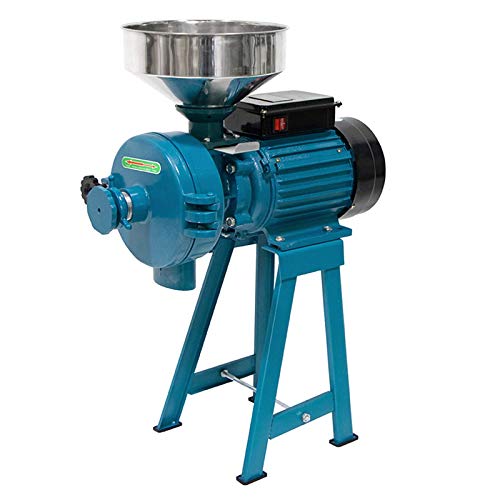
- 166-pound listed capacity
- Wet and dry grinding discs
- 80-mesh stated grinding fineness
Best For: Commercial-scale grain, bean, rice, and feed processing
Compact High-Capacity Mill
2500g Stainless Steel Flour Grinder

- 2500g jar for larger dry batches
- 30- to 300-mesh fineness range
- Overload protection and locking lid
Best For: Dry grain and spice processing in kitchens and small commercial spaces
Wet-and-Dry Commercial Power

- 3000W motor for commercial-style grinding
- Separate discs for wet and dry processing
- Handles grains, soybeans, rice, and feed
Best For: Large-batch users needing both wet and dry grinding
Manual Large-Capacity Control
Lehman's Manual Power Grain Mill

- Six-cup hopper for fewer refills
- 12-inch flywheel supports easier hand grinding
- Works with several dry grains and small beans
Best For: Off-grid or self-sufficient dry-flour grinding
High-Throughput Dry Grinding

- Rated for up to 120 pounds per hour
- 150mm steel disc for consistent dry grinding
- Handles grains, legumes, coffee, and feed
Best For: Farms and small commercial dry-grinding operations
High-Capacity Swing Mill
2500g VEVOR Electric Grain Grinder

- 2500g capacity with a 3400W, 32000-RPM motor
- 30–300 mesh adjustment and timed grinding
- 270° swing body with safety protections
Best For: Large dry-grinding batches of grains, coffee, and spices
Farm-Scale Throughput
3000W Commercial Grain Grinder

- Rated for 200 pounds of grain per hour
- Adjustable settings from coarse meal to fine powder
- Heavy-duty galvanized cast-iron housing
Best For: Small farms, livestock feed, and high-volume dry milling
Fine-Powder Versatility

- 2000g capacity with a 3400W, 32000-RPM motor
- 270° swing design aids pouring and powder uniformity
- Three-layer blade and 30–300 mesh grinding range
Best For: Fast, fine grinding of dry grains, cereals, coffee, and spices
Heavy-Duty Wet/Dry Workhorse – 3000W Commercial Grain Mill
For shoppers comparing grain mills for large batches, this VEVOR model stands out for its 3000W motor, heavy-duty cast-iron body, and wet/dry grinding capability. Its adjustable setting and funnel feed are useful when processing grains, spices, feed, or soaked beans in a more demanding setup.
Best For: Commercial-style grain, feed, spice, and wet soybean or rice processing.
Pros:
- 3000W motor supports continuous, high-volume grinding.
- Includes separate cast-iron and sand milling discs for dry and wet work.
- Adjustable thickness accommodates grains, spices, coffee, cereal, and nuts.
- Stainless steel funnel and cast-iron construction are built for repeated use.
Cons:
- Its industrial size and construction may be excessive for a typical kitchen.
- The supplied notes do not specify a stated batch capacity or noise level.
This is a strong choice when versatility and rugged construction matter more than compactness. The wet-grinding disc broadens its use beyond standard flour milling, while the high-power motor suits larger workloads.
Manual Batch Control – Victoria 2400g Cast-Iron Grain Mill
For grain mills for large batches without relying on electricity, the Victoria manual mill offers a high hopper, 2400g capacity, and durable cast-iron construction. It clamps to tables between 1/2 and 2 inches thick, making it a practical option for hands-on corn and grain processing.
Best For: Manual corn, grain, coffee, seed, and spice grinding where portability or power-free operation is important.
Pros:
- 2400g capacity and high hopper support larger manual loads.
- Cast-iron body, crank, and erosion-resistant discs are designed for durability.
- Adjustable screw changes the grind from coarser to finer textures.
- Table clamp and non-slip protector help secure the mill during use.
Cons:
- Manual operation requires substantially more effort for large batches.
- It cannot produce a superfine texture or fine whole-wheat powder.
- The supplied warranty is limited to 90 days.
This mill makes the most sense for buyers who value simple, electricity-free operation and traditional cast-iron construction. Its limitations on fineness make it less suitable for ultra-fine flour production.
High-Volume Electric Grinder – 3000W Wet/Dry Grain Mill
Designed with a listed 166-pound capacity, this 3000W electric model is a compelling candidate among grain mills for large batches. It uses separate wet and dry discs, reaches a stated fineness of up to 80 mesh, and is intended for commercial grinding of grains, beans, rice, and feed.
Best For: High-volume commercial processing of dry grains, soaked beans, rice, and animal feed.
Pros:
- Large listed capacity suits substantial processing workloads.
- Wet and dry grinding discs expand its use for flour, pulp, and feed.
- 3000W, 110V motor is designed for powerful electric grinding.
- Aluminum alloy capacitor shell helps resist crushing and rust.
Cons:
- The manufacturer notes that its high power produces significant noise.
- Its commercial format may not be suitable for a household kitchen.
- The supplied notes do not provide a specific operating duty cycle.
Choose this model when throughput and wet/dry versatility are priorities. Its capacity and power favor a dedicated work area rather than quiet, occasional household use.
Compact High-Capacity Mill – 2500g Stainless Steel Flour Grinder
For buyers seeking grain mills for large batches in a kitchen or small commercial setting, this stainless steel grinder combines a 2500g jar with a 3600W copper motor. Its three-layer blade system is rated for 30- to 300-mesh results, while overload protection and a locking lid add useful operating safeguards.
Best For: Home kitchens, coffee shops, restaurants, and small commercial operations processing dry grains, beans, coffee, and spices.
Pros:
- 2500g stainless steel jar handles relatively large single cycles.
- 3600W motor and 36,000 RPM speed support fine grinding.
- 30- to 300-mesh range offers broad control over fineness.
- Overload protection, timer switch, and secure lid improve usability.
Cons:
- Operation is limited to 3-minute intervals with 5- to 10-minute cooling breaks.
- It is intended for completely dry ingredients only.
- Cleaning requires a dry cloth; the unit should not be washed with water.
This is a versatile option for high-volume dry ingredients when a compact footprint matters. Its cooling schedule means it is better for repeated controlled batches than uninterrupted commercial production.
Wet-and-Dry Commercial Power – 3000W Wet Dry Grain Mill
For shoppers comparing grain mills for large batches, this 3000W model stands out for its commercial-oriented power and ability to handle both dry and wet ingredients. It includes separate steel and sand milling discs for processing grains, soaked soybeans, rice, and other foods, though its high-power operation can be noisy.
Best For: Commercial or food-processing use involving both dry grain powder and wet soybean or rice pulp.
Pros:
- 3000W motor and 110V operation are designed for heavy-duty grinding.
- Supports both dry grinding and wet grinding with separate discs.
- Handles wheat, rice, corn, sorghum, soybeans, starch, and feed materials.
- Aluminum-alloy construction is intended to resist rust and transport damage.
Cons:
- Its high-power motor can produce substantial noise.
- The manufacturer notes it may not be suitable for a typical household kitchen.
- Its 20-by-10.5-by-29-inch footprint requires dedicated space.
Choose this mill if versatility matters as much as throughput and you need one machine for dry powders and wet pulp. For home kitchens, the noise and commercial-sized design are important trade-offs.
Manual Large-Capacity Control – Lehman's Manual Power Grain Mill
Among grain mills for large batches, Lehman’s manual model offers a non-electric approach with a six-cup hopper and a 12-inch flywheel that adds momentum during hand grinding. It is designed for free-flowing dry grains and can also be motorized when you want a less manual setup.
Best For: Self-sufficient households and users who want manual control over dry-grain flour production.
Pros:
- Six-cup hopper supports larger loading between refills.
- Grinds wheat, corn, rye, rice, quinoa, and small beans to pastry flour.
- 12-inch iron V-belt flywheel helps make hand grinding easier.
- Stainless steel burrs have an electrolytically polished grinding surface.
Cons:
- Manual grinding requires physical effort and may be slower than powered mills.
- It is intended for dry, free-flowing ingredients rather than wet grinding.
- At 26 pounds and 14 inches high, it is not especially lightweight.
This is a practical choice when electricity-free operation and freshly ground flour are priorities. Its large hopper helps with bigger sessions, while the optional motorization adds flexibility if manual grinding becomes inconvenient.
High-Throughput Dry Grinding – Slsy 3000W Grain Mill
If your priority is processing volume, this Slsy model is one of the more direct options among grain mills for large batches. Its 3000W motor and 150mm steel grinding disc are rated to handle up to 120 pounds per hour across grains, coffee beans, legumes, and feed materials.
Best For: Farms, workshops, and small commercial operations that need high-volume dry grinding.
Pros:
- Rated capacity reaches up to 120 pounds per hour.
- 3000W motor and 150mm steel disc support fast dry grinding.
- Processes corn, wheat, rice, coffee beans, soybeans, chickpeas, peanuts, and feed.
- Galvanized iron construction and a simple disc design support maintenance and cleaning.
Cons:
- It is designed for dry ingredients, not wet grinding.
- The 20-by-10.5-by-29.5-inch body needs substantial operating space.
- Its commercial-oriented design may be more machine than occasional home users need.
This mill is a strong fit when throughput and ingredient range matter more than compactness. Its dry-only design keeps the choice focused, making it best suited to repeated farm, workshop, or small-business grinding tasks.
High-Capacity Swing Mill – 2500g VEVOR Electric Grain Grinder
For shoppers comparing grain mills for large batches, this VEVOR model stands out with a 2500g capacity, 3400W motor, and fast dry-grinding performance. Its swing design helps with pouring and may improve powder uniformity, while adjustable timing and fineness settings add control.
Best For: Home users or small operations processing large batches of dry grains, coffee, spices, and similar ingredients.
Pros:
- Handles up to 2500g and can grind dry ingredients in as little as 30 seconds.
- High-speed 3400W motor and three-layer blade system support fine, even results.
- Offers 30–300 mesh fineness adjustment, timer settings, overload protection, and lid-open auto-stop.
- Stainless-steel construction and 270° swing design simplify handling and cleaning.
Cons:
- Only suitable for dry materials; wet, oily, fresh, and sticky ingredients are excluded.
- Requires rest periods after continuous operation.
- Must be cleaned with a damp cloth and brush rather than rinsed directly with water.
This is a strong capacity-focused option when speed and fine powder are priorities. Buyers should account for its duty-cycle limits and dry-only design before using it for repeated large batches.
Farm-Scale Throughput – 3000W Commercial Grain Grinder
Among grain mills for large batches, this industrial-style grinder is geared toward throughput rather than compact countertop use. Its 3000W copper motor is rated to process 200 pounds of grain per hour, and the adjustable grind setting supports both coarse feed and finer flour.
Best For: Small livestock farms, home milling, brewing, and other users who value high hourly capacity.
Pros:
- Advertised processing rate of up to 200 pounds of grain per hour.
- Adjustable grind control handles coarse grains through fine powder.
- Designed for dry corn, wheat, soybeans, rice, barley, herbs, and related materials.
- Galvanized cast-iron housing is intended to resist rust and provide a sturdy build.
Cons:
- At 47 pounds and nearly 31 inches tall, it is less portable than smaller mills.
- The supplied notes do not specify a hopper capacity or detailed duty cycle.
- Its industrial form may be more machine than occasional kitchen users need.
This is the most throughput-oriented choice in the group, particularly for feed and farm use. Its substantial size and weight make a dedicated, stable location practical.
Fine-Powder Versatility – VEVOR 2000g Swing Grain Mill
This 2000g VEVOR grinder is a practical pick for grain mills for large batches when you want fast, superfine results without moving an upright machine. The 3400W motor, 270° swing body, three-layer blade, and timed operation are suited to dry grains, cereals, coffee, and spices.
Best For: Users needing repeated batches of dry ingredients with convenient pouring and fine-grind capability.
Pros:
- Grinds up to 2000g and can process dehydrated ingredients in about 30 seconds.
- 270° swing design helps with pouring and can support more uniform grinding.
- Three-layer blade system and 30–300 mesh range support fine powder production.
- Includes lid-lock operation, automatic lid-open stop, and overload protection.
Cons:
- Limited to dry materials and should not be used with wet, fresh, oily, or sticky ingredients.
- Requires a 5–10 minute rest after each five-minute operating period.
- Recommended fill level is no more than two-thirds of the jar, with one-half suggested for best results.
Choose this model for a balance of batch capacity, compact handling, and fine grinding. Its operating breaks and careful loading requirements matter when planning continuous production.
How We Picked the Best Grain Mills for Large Batches
We focused on the features that matter most when processing substantial quantities: hopper or chamber capacity, motor power, grinding speed, construction, grind adjustment, operating method, and ease of cleaning. The selection includes electric models rated from 3000W to 3400W, as well as manual mills designed for users who value durability, control, and operation without electricity.
Because advertised capacity and performance can vary by grain type, moisture, grind setting, and operating cycle, treat wattage as one comparison point rather than a guarantee of output. Always confirm the manufacturer’s instructions for suitable ingredients and recommended duty cycle.
Quick Comparison
| Best For | What to Look For |
|---|---|
| Fast, high-volume grinding | A powerful electric motor, large grinding chamber, and appropriate cooling or rest intervals |
| Off-grid or backup use | A sturdy manual mill with a large hopper and comfortable flywheel or handle |
| Different flour textures | Adjustable settings or interchangeable grinding controls |
| Frequent cleaning | Accessible chambers, removable parts, and corrosion-resistant stainless steel |
| Small commercial work | Heavy-duty construction, stable placement, and clear capacity specifications |
Key Buying Factors for Grain Mills for Large Batches
Electric Power and Duty Cycle
High-wattage electric mills can process dry grains quickly, but a larger motor does not eliminate heat buildup. Check whether the machine is intended for continuous use and follow rest periods to protect the motor and preserve flour quality.
Capacity and Actual Throughput
Look at both the hopper size and the grinding chamber capacity. A large hopper reduces refilling, while throughput depends on the grain, moisture level, desired fineness, and whether the mill can run continuously. A generous advertised capacity is useful, but it should not be confused with pounds-per-minute performance.
Grind Control and Food Compatibility
Choose adjustable grinding when you need more than one texture, such as coarse cornmeal and fine flour. Verify that the model supports your intended grains and does not permit wet, oily, or sticky ingredients unless specifically designed for them.
Materials, Stability, and Cleanup
Stainless steel chambers resist corrosion and are often easier to sanitize, while cast iron offers substantial durability in manual designs. A stable base, secure hopper, and accessible grinding area are especially important when processing large batches. Consider dust control and how easily residual flour can be removed between ingredients.
Who Should Buy Which Grain Mills for Large Batches?
Choose a high-powered electric mill if speed and reduced effort are your priorities, particularly for frequent flour, corn, or dry-grain production. Models with adjustable settings are the better fit for households or small businesses that need multiple textures.
A manual mill is a stronger choice for off-grid use, emergency preparedness, or users who prefer simple equipment with fewer electrical components. Manual grinding requires more effort and time, but a large hopper and substantial flywheel can make repeated batches more manageable.
For occasional home use, prioritize manageable size, cleaning convenience, and safe operation over maximum wattage. For frequent or commercial-style work, confirm capacity, duty-cycle guidance, warranty coverage, replacement parts, and available electrical requirements before buying.