Flow control gives espresso enthusiasts more influence over how water moves through the coffee puck, making it easier to refine extraction and develop a preferred shot profile.
We’ve compared 10 machines across control features, temperature management, workflow, included equipment, and everyday usability to help you choose a setup that matches your skill level and budget.
Best 10 Espresso Machine with Flow Control Picks for 2026
Best for Manual Flow Profiling

- Dedicated flow-control valve and pressure gauge
- Dual boilers with PID temperature control
- Shot timer, adjustable OPV, and 58mm portafilter
Best For: Hands-on home baristas experimenting with espresso flow profiles
Best All-in-One Control

- Six adjustable brewing parameters
- Integrated 35-setting conical burr grinder
- Dual boilers, dual pumps, and automated tamping
Best For: Users wanting extensive recipe control with an integrated workflow
Best for Programmable Preinfusion
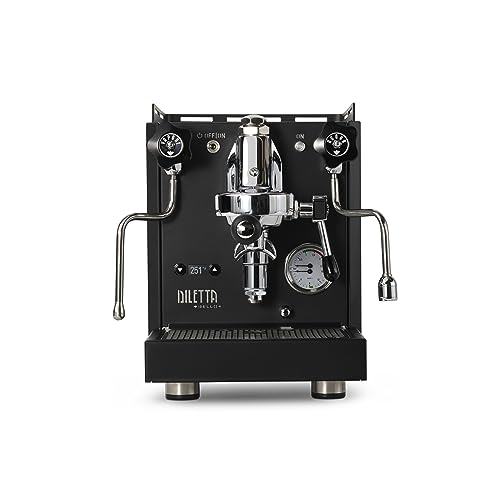
- Programmable passive preinfusion up to 10 seconds
- Dual boilers with PID and shot timer
- Manual controls and handmade Italian construction
Best For: Traditionalists who already own or plan to buy a separate grinder
Best Entry-Level Workflow

- Integrated conical burr grinder
- Low-pressure pre-infusion and PID control
- Manual steam wand with included accessories
Best For: Beginners seeking an all-in-one manual espresso setup
Premium Flow Control

- Manual flow valve and group pressure gauge
- Dual boilers with PID temperature control
- 58mm portafilters and integrated shot timer
Best For: Experienced home baristas who want hands-on extraction control
All-in-One Convenience
EUHOMY Espresso Machine with Grinder

- Integrated grinder with 30 settings
- PID temperature control and 58mm portafilter
- Steam wand for latte art and cappuccinos
Best For: Beginners who prioritize grinding and milk drinks in one machine
Statement Finish

- Manual flow control with pressure gauge
- Dual boilers, PID controls, and shot timer
- Includes bottomless portafilter and multiple baskets
Best For: Enthusiasts wanting flow profiling with a white stainless-steel finish
Flexible Bean-to-Cup Control
AMZCHEF Espresso Machine With Grinder

- 44 grind settings for espresso and other brew styles
- 190°F–201°F adjustable temperature control
- 60-ounce tank, cold brew mode, and steam wand
Best For: Convenient bean-to-cup brewing with adjustable grind and temperature
Manual Pressure Tuning
Diletta Alto Dual Boiler Espresso Machine

- Adjustable OPV for customized brew pressure
- PID controls, dual boilers, and shot timer
- Includes bottomless and double portafilters
Best For: Experienced users prioritizing pressure and temperature control
Fast Touchscreen Convenience
AIRMSEN Dual Boiler Espresso Machine

- One-click espresso, cappuccino, and latte preparation
- Dual boilers with pre-infusion and 20-bar pump
- Automatic milk frother and removable water tank
Best For: Quick, convenient milk drinks with minimal manual preparation
Best for Manual Flow Profiling – Diletta Alto
If you want an espresso machine with flow control for hands-on shot profiling, the Diletta Alto combines a dedicated flow-control valve and pressure gauge with dual boilers, PID temperature control, and a shot timer. It is a substantial, manually operated machine for baristas who want to experiment with declining flow and turbo shots.
Best For: Home baristas who prioritize manual flow profiling, stable temperature control, and simultaneous brewing and steaming.
Pros:
- Dedicated flow-control valve and pressure gauge allow manual adjustment of flow to the puck.
- Dual boilers support separate brewing and steaming functions.
- PID controls, a shot timer, adjustable OPV, and a 58mm portafilter support precise dialing-in.
- Includes both double and bottomless portafilters plus useful cleaning accessories.
Cons:
- Its 22-minute brew warm-up time requires planning.
- The 40-pound stainless-steel machine is not especially easy to move.
- Manual flow control demands more technique than a push-button espresso setup.
The Alto is the clearest match here for buyers specifically seeking hands-on flow control. Its dual-boiler design and detailed controls make it versatile, but the size, weight, warm-up time, and learning curve suit committed home enthusiasts more than casual users.
Best All-in-One Control – Pedrocchi S60Ultra
The Pedrocchi S60Ultra is a feature-rich alternative for shoppers considering an espresso machine with flow control-style brewing adjustments. Rather than highlighting a manual flow valve, it provides six adjustable brewing parameters, an integrated grinder, rotary tamping, PID plus NTC temperature management, and dual boilers.
Best For: Coffee enthusiasts who want extensive recipe adjustment and an integrated bean-to-cup workflow.
Pros:
- Six adjustable parameters include pre-infusion time, pre-infusion volume, brew volume, temperature, grind size, and grind time.
- 35-setting conical burr grinder and automated rotary tamping simplify preparation.
- Dual boilers and dual pumps support brewing and steaming at the same time.
- PID plus NTC control monitors and adjusts temperature in real time.
Cons:
- The supplied notes do not identify a dedicated manual flow-control valve or flow gauge.
- Its extensive automation may offer less direct puck-level control than a traditional flow-profiling machine.
- The feature-heavy design may be more than casual espresso drinkers need.
The S60Ultra is best viewed as a highly adjustable, integrated espresso system rather than a conventional manual flow-control machine. It is appealing if convenience, repeatability, and broad recipe tuning matter more than physically manipulating flow during extraction.
Best for Programmable Preinfusion – Diletta Bello+
The Diletta Bello+ is a strong choice for buyers who want an espresso machine with flow-control potential through careful preinfusion and manual operation. Its E61 group, programmable passive preinfusion, PID temperature display, shot timer, and dual-boiler design give experienced users several ways to improve shot consistency.
Best For: Traditional espresso enthusiasts who prefer manual controls and programmable preinfusion over an integrated grinder.
Pros:
- Programmable passive preinfusion can be set for up to 10 seconds.
- Dual boilers support separate brewing and steaming operations.
- PID screen doubles as a shot timer during brewing.
- Handmade stainless-steel construction and a larger drip tray suit regular home use.
Cons:
- The supplied notes do not list a dedicated flow-control valve or flow gauge.
- A grinder is not included, so a separate espresso grinder is needed.
- Manual brew and steam controls require hands-on technique.
The Bello+ is a better fit for traditionalists who want control over preinfusion and extraction workflow without built-in grinding. It can support careful experimentation, but shoppers seeking direct, adjustable flow-rate control should confirm that feature before choosing it over the Alto.
Best Entry-Level Workflow – Breville Barista Express
The Breville Barista Express is a practical entry point for shoppers comparing an espresso machine with flow control against a more accessible manual setup. It does not provide a dedicated flow-control valve, but it offers low-pressure pre-infusion, PID temperature regulation, adjustable grinding, and manual steaming in one compact workflow.
Best For: Beginners who want an integrated grinder and straightforward manual control for espresso, cappuccino, and latte preparation.
Pros:
- Low-pressure pre-infusion gradually increases pressure for more even extraction.
- Integrated conical burr grinder doses directly into the portafilter.
- PID temperature regulation supports precise espresso extraction.
- Includes a steam wand, 54mm portafilter, tamper, baskets, and cleaning supplies.
Cons:
- It lacks the dedicated manual flow-control valve and gauge found on the Diletta Alto.
- Its single-boiler design is less suited to simultaneous brewing and steaming.
- The 54mm portafilter is smaller than the 58mm format used by the Alto and Bello+.
The Barista Express makes sense when convenience and value are more important than advanced flow profiling. Its integrated grinder and guided features reduce equipment costs and setup complexity, while the low-pressure pre-infusion provides some control over the start of extraction.
Premium Flow Control – Diletta Alto Black
The Diletta Alto is a strong choice if you want an espresso machine with flow control and the flexibility of a dual-boiler setup. Its manual flow valve and group pressure gauge let you shape extraction while PID controls, a shot timer, and an adjustable OPV support repeatable brewing.
Best For: Experienced home baristas who want manual extraction control, separate brew and steam boilers, and a commercial-style 58mm workflow.
Pros:
- Manual flow control supports declining-flow and turbo-shot techniques.
- Dual boilers allow dedicated brewing and steaming.
- PID controls and an integrated shot timer aid consistency.
- Includes both double and bottomless portafilters.
Cons:
- At 40 pounds and nearly 20 inches deep, it needs substantial counter space.
- The listed brew warm-up time is about 22 minutes.
- It uses ground coffee only, with no integrated grinder.
Choose the Alto Black when hands-on flow profiling matters more than compactness or speed. Its dual-boiler design and adjustable brewing controls make it a capable platform for dialing in espresso, provided you have room for its size and weight.
All-in-One Convenience – EUHOMY Espresso Machine with Grinder
The EUHOMY is an accessible alternative for shoppers comparing an espresso machine with flow control, although its supplied features focus on grinding, temperature stability, and milk preparation rather than manual brew-flow adjustment. It combines a grinder, 58mm portafilter, PID control, and steam wand in one semi-automatic machine.
Best For: Beginners and convenience-focused home users who want freshly ground coffee, espresso, and milk drinks from one appliance.
Pros:
- Integrated grinder offers 30 grind settings and an anti-clog design.
- PID control is specified to remain stable within ±1°C.
- Includes a 58mm portafilter and high-pressure steam wand.
- Supports whole-bean or ground coffee and has a removable tank.
Cons:
- The supplied notes do not list a manual flow-control valve or flow gauge.
- It has a single-boiler-style appliance design rather than a stated dual-boiler system.
- Its 16.2-inch height may require checking cabinet clearance.
This model makes the most sense if integrated grinding and simple milk-drink preparation are higher priorities than true flow profiling. If manual flow adjustment is essential, verify the feature set carefully before choosing it over a dedicated flow-control machine.
Statement Finish – Diletta Alto White
The white Diletta Alto is an espresso machine with flow control designed for baristas who want detailed control over extraction without giving up dual-boiler performance. Its built-in flow valve and pressure gauge work alongside PID temperature management, an adjustable OPV, and a shot timer.
Best For: Home espresso enthusiasts seeking a manual flow-profiling setup with a clean white finish and dedicated steam capacity.
Pros:
- Built-in flow control enables manual adjustment at the group.
- Separate brew and steam boilers support simultaneous workflow demands.
- Front-mounted PID controls manage brew and steam temperatures.
- Includes a bottomless portafilter, multiple baskets, and a tamper.
Cons:
- Its 40-pound weight and 19.75-inch depth make it a substantial machine.
- Warm-up to brewing temperature is listed at approximately 22 minutes.
- Manual operation and ground-coffee input require more user involvement.
The Alto White offers the same flow-profiling toolkit as the black version, with a brighter countertop presentation. It is best suited to users who are comfortable weighing, dialing in, and manually managing espresso rather than seeking a push-button appliance.
Flexible Bean-to-Cup Control – AMZCHEF Espresso Machine With Grinder
The AMZCHEF is a practical choice if you want an espresso machine with flow control-style brewing flexibility through adjustable temperature, grind size, and brew settings. Its integrated grinder, touchscreen, and one-touch operation make it approachable for beginners while retaining useful adjustment options for different beans.
Best For: Home users who want an integrated grinder, broad grind adjustment, and simple milk-drink preparation.
Pros:
- Offers 44 grind settings, from fine espresso to coarse French press.
- Adjustable 190°F–201°F temperature range helps suit different roast levels.
- Includes a 60-ounce water tank, cold brew mode, and steam wand for microfoam.
Cons:
- Its notes do not specify manual flow-rate adjustment, so it may not satisfy users seeking dedicated flow profiling.
- The integrated grinder and multiple modes add more components to maintain than a basic espresso machine.
This model suits shoppers who value convenience and bean-to-cup versatility more than dedicated manual flow profiling. The touchscreen and one-touch brewing simplify daily use, while temperature and grind adjustments provide meaningful control.
Manual Pressure Tuning – Diletta Alto Dual Boiler Espresso Machine
Diletta Alto Espresso Machine | Dual Boiler | PID | Shot Timer | Adjustable OPV | (Black)
Check Price On AmazonThe Diletta Alto is a strong fit for experienced home baristas comparing an espresso machine with flow control capabilities. It does not include a dedicated flow-control system, but its adjustable OPV lets you customize brew pressure, while the PID, shot timer, and dual boilers support repeatable manual brewing.
Best For: Experienced espresso makers who want pressure adjustment, temperature precision, and separate brew and steam boilers.
Pros:
- Accessible adjustable OPV allows customization of brew pressure.
- Dual boilers and PID controls provide separate brew and steam temperature management.
- Includes a shot timer, pre-infusion, 58mm portafilter, and bottomless portafilter.
Cons:
- The supplied model name specifies “Without Flow Control,” so it is not a dedicated flow-profiling machine.
- Its listed warm-up time is about 22 minutes, and the 40-pound body is substantial.
- It requires ground coffee and manual operation rather than offering an integrated grinder or automatic drinks.
The Alto is better understood as a pressure- and temperature-focused platform than a true flow-control machine. Its adjustable OPV and bottomless portafilter offer useful tools for dialing in shots, but buyers specifically seeking paddle-based flow profiling should look elsewhere.
Fast Touchscreen Convenience – AIRMSEN Dual Boiler Espresso Machine
The AIRMSEN is aimed at convenience rather than the hands-on profiling expected from an espresso machine with flow control. Its pre-infusion, 20-bar pump, dual boilers, touchscreen, and automatic milk frother streamline espresso, cappuccino, and latte preparation with minimal manual work.
Best For: Households that want fast, largely automatic milk drinks and compact touchscreen operation.
Pros:
- Automatic one-click preparation supports espresso, cappuccino, and latte drinks.
- Dual boilers separate extraction and milk frothing functions.
- Includes pre-infusion, a removable water tank, automatic milk frother, and touchscreen controls.
Cons:
- The supplied notes do not mention adjustable flow rate or brew-pressure profiling.
- It uses ground coffee rather than an integrated grinder.
- Automatic milk and touchscreen systems may offer less hands-on control than a traditional manual setup.
This is a sensible pick when speed and convenience matter more than manually shaping an espresso shot. Although it is not a dedicated flow-control machine, its pre-infusion and dual-boiler design provide a straightforward path to repeatable drinks.
How We Picked the Best Espresso Machine with Flow Control
We focused on machines that offer meaningful control over espresso preparation, including adjustable flow or pressure-related settings, PID temperature control, programmable preinfusion, shot timers, and adjustable over-pressure valves where listed. We also considered boiler configuration, grinder integration, milk-frothing capability, heat-up expectations, maintenance, and the learning curve.
Because the selected models span enthusiast-focused dual-boiler machines and more accessible grinder-equipped systems, we judged each according to its intended use rather than treating every feature as equally important. A machine with advanced control may suit a hobbyist better, while an all-in-one model can be more practical for a first home setup.
Quick Comparison
- Best for maximum shot control: Diletta Alto models, with dual boilers, PID control, shot timing, and flow-control features.
- Best for traditional espresso workflow: Diletta Bello+, featuring an E61 group and programmable preinfusion.
- Best all-in-one starting point: Breville Barista Express, with an integrated grinder and familiar semi-automatic controls.
- Best for convenience: EUHOMY, AMZCHEF, and AIRMSEN models, which combine brewing with grinder or automatic milk features.
- Best for higher-capacity home use: S60Ultra, depending on its included controls, accessories, and physical footprint.
Key Buying Factors for an Espresso Machine with Flow Control
Actual Flow and Pressure Adjustment
Check whether the machine provides direct flow profiling, an adjustable OPV, programmable preinfusion, or only a pressure gauge. These features are related but not interchangeable. Direct flow control offers the most flexibility, while an adjustable OPV mainly limits peak brewing pressure.
Temperature Stability and Boiler Design
PID regulation helps maintain a more consistent brewing temperature. Dual-boiler machines are particularly useful when brewing espresso and steaming milk at the same time, although they generally cost more and require more counter space. Thermoblock or single-boiler designs can be adequate for occasional drinks and smaller kitchens.
Grinder and Workflow
A capable espresso grinder is essential, even with a sophisticated machine. Integrated grinders save space and simplify setup, but a separate grinder may offer finer adjustment, easier upgrades, and better long-term flexibility. Consider dosing controls, grind settings, portafilter size, and how quickly you can switch between coffee types.
Milk Drinks, Maintenance, and Space
Strong steam performance matters if you regularly make cappuccinos or lattes. Automatic frothing improves convenience but gives you less textural control than a manual wand. Also check water-tank access, cleaning cycles, backflushing requirements, warm-up time, and the machine’s width and height beneath cabinets.
Who Should Buy Which Espresso Machine with Flow Control?
Choose a Diletta Alto if shot experimentation, temperature consistency, and simultaneous brewing and steaming are priorities. The Bello+ is a strong fit for buyers who prefer an E61-style workflow and hands-on preparation. Choose the Barista Express if you want one recognizable machine with a built-in grinder and a manageable learning curve.
For buyers prioritizing convenience or a lower-complexity setup, the EUHOMY, AMZCHEF, or AIRMSEN models may be more suitable, especially when integrated grinding or automatic milk preparation matters most. The S60Ultra is worth considering when its semi-automatic controls and included features align with your preferred workflow. Before purchasing, confirm the current specifications, included accessories, warranty, and available service support.