The best energy-efficient mini refrigerators keep drinks, snacks, and everyday essentials cold without taking up the space or using the power of a full-size appliance. This roundup compares 10 compact models with practical features such as freezers, adjustable thermostats, quiet operation, and flexible storage.
Whether you need a small refrigerator for a dorm room, home office, bedroom, RV, or guest space, use the comparisons below to match capacity and features with your available room and daily routine.
Best 10 Energy Efficient Mini Refrigerators Picks for 2026
Best Overall
Midea 3.1 Cu. Ft. Energy Star Mini Fridge

- Energy Star certified with 270 kWh annual consumption
- Separate 0.92-cu.-ft. freezer compartment
- Reversible door and interior LED light
Best For: Roomy dorms, apartments, and compact kitchens
Best Compact Pick
BLACK+DECKER 2.5 Cu. Ft. Mini Fridge
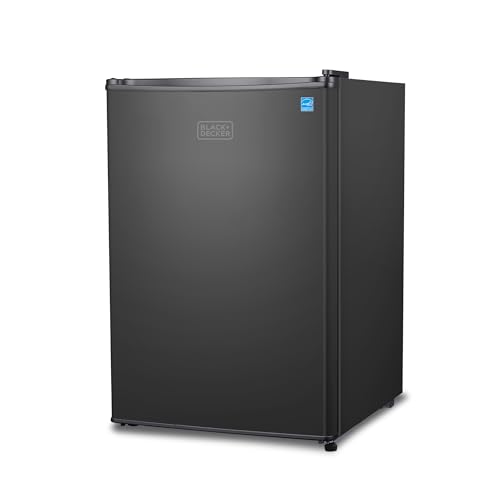
- Energy Star certified with R600a refrigerant
- Removable glass shelves and door bins
- Reversible door with adjustable leveling legs
Best For: Dorm rooms, offices, RVs, and home bars
Best Value Capacity
3.2 Cu. Ft. Mini Fridge with Freezer

- Reported 210 kWh annual energy consumption
- 3.2 cu. ft. capacity with upright freezer
- Reversible door and adjustable organization
Best For: Users seeking capacity and low reported energy use
Best Retro Design
Frigidaire 1.6 Cu. Ft. Retro Mini Fridge

- Reported 200 kWh annual energy consumption
- Retro styling with built-in bottle opener
- Reversible door and flush-back placement
Best For: Drinks, snacks, and stylish compact spaces
Best for Easy Setup
Midea 1.6 Cu. Ft. Energy Star Mini Fridge

- Energy Star certified and rated at 207 kWh per year
- Compact footprint with reversible door
- Quiet operation below 42 dB
Best For: Small rooms, dorms, offices, and apartments
Best Storage Balance
Upstreman 3.2 Cu. Ft. Mini Fridge with Freezer

- 3.2 cubic feet total capacity with a 0.3-cubic-foot freezer
- Energy Star certified and rated at 206 kWh per year
- Quiet 38 dB operation with adjustable storage
Best For: Dorms, bedrooms, offices, and apartments needing a freezer
Best Low-Noise Features
3.2 Cu. Ft. Mini Fridge with Freezer

- Compressor operation is rated below 37 dB
- Includes LED light, crisper drawer, and two glass shelves
- One-touch defrosting and adjustable thermostat
Best For: Quiet bedrooms, offices, and dorm rooms
Best Large-Capacity Pick
EUHOMY 4.5 Cu.Ft. Two-Door Mini Fridge
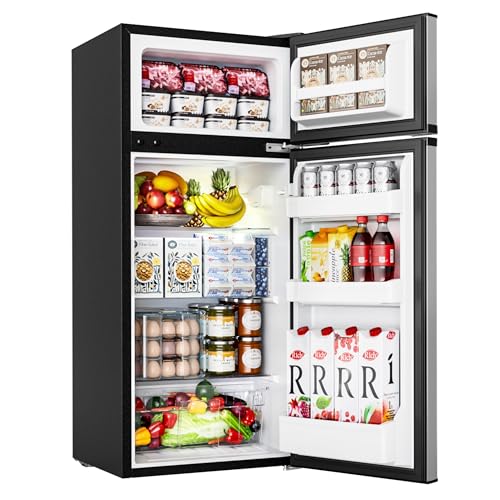
- 4.5 cu. ft. capacity with a separate 0.8 cu. ft. freezer
- Reported consumption of 1 kWh per day
- Quiet 38 dB operation with reversible door
Best For: Shoppers needing substantial storage in a compact two-door refrigerator
Best Simple Compact Option
Igloo 3.2 Cu.Ft. Mini Fridge with Freezer
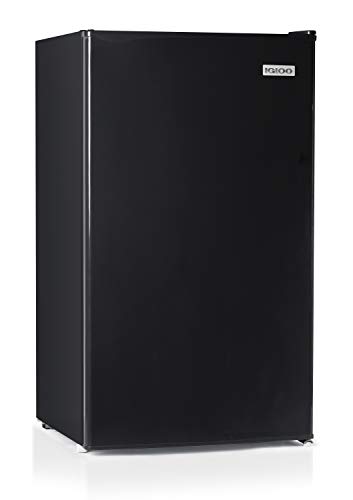
- 3.2 cu. ft. capacity with a compact single-door layout
- Adjustable thermostat and 32–50°F refrigerator range
- Glass shelves plus a separate freezer compartment
Best For: Dorms, offices, and homes needing basic cold storage
Best Low-Consumption Pick
EUHOMY 3.2 Cu.Ft. Compact Mini Fridge

- Listed at 180 kWh annual energy consumption
- Compact 3.2 cu. ft. refrigerator with micro-freezer
- Quiet 38 dB operation and reversible door
Best For: Energy-conscious users with modest refrigeration needs
Best Overall – Midea 3.1 Cu. Ft. Energy Star Mini Fridge
The Midea WHD-113FB1 is a strong choice among energy efficient mini refrigerators when you need both fresh-food and freezer storage. Its 3.1-cubic-foot capacity, Energy Star certification, reversible door, and interior light make it practical for dorms, apartments, garages, and compact kitchens.
Best For: Shoppers who want a roomy mini fridge with a separate freezer and flexible placement options.
Pros:
- Energy Star certified with reported annual consumption of 270 kWh.
- Separate 0.92-cubic-foot freezer and 2.16-cubic-foot refrigerator sections.
- Reversible door, LED interior light, removable glass shelves, and crisper drawer.
- Adjustable temperature ranges for both refrigerator and freezer compartments.
Cons:
- Manual defrost requires periodic maintenance.
- At 52.2 pounds, it is heavier than some smaller compact models.
Choose the Midea if capacity and organization matter as much as energy efficiency. The compressor cooling system and multi-airflow design add everyday practicality, while the two-door layout makes frozen items easier to separate from fresh food.
Best Compact Pick – BLACK+DECKER 2.5 Cu. Ft. Mini Fridge
The BLACK+DECKER BCRK25B is a compact option for shoppers comparing energy efficient mini refrigerators for a dorm, office, home bar, or RV. Its 2.5-cubic-foot interior combines a small chiller compartment with removable glass shelves and door storage while keeping the footprint modest.
Best For: Small-space users who prioritize a compact, Energy Star certified refrigerator for drinks, snacks, and leftovers.
Pros:
- Energy Star certified and uses R600a refrigerant with a high-efficiency compressor.
- Two removable glass shelves help customize the storage layout.
- Reversible door and adjustable leveling legs support flexible installation.
- Door bins accommodate cans, small containers, and 2-liter bottles.
Cons:
- The 0.2-cubic-foot chiller compartment is limited for substantial frozen storage.
- It does not include an inverter.
This model is best when you need straightforward refrigerated storage without the bulk of a larger mini fridge. Its automatic defrost and small footprint can also simplify everyday use in tight rooms.
Best Value Capacity – 3.2 Cu. Ft. Mini Fridge with Freezer
This 3.2-cubic-foot mini fridge offers useful capacity and a reported 210 kWh annual energy consumption, making it a practical contender among energy efficient mini refrigerators. The single-door design includes a dedicated upright freezer, adjustable shelving, door bins, and a reversible door for bedrooms, offices, and dorms.
Best For: Budget-conscious users who want a relatively large compact refrigerator with modest energy use and a dedicated freezer.
Pros:
- Reported annual energy consumption is 210 kWh, or about 0.6 kWh per day.
- 3.2-cubic-foot capacity includes a 0.35-cubic-foot freezer compartment.
- Reversible door, adjustable shelves, and door bins support flexible organization.
- ETL safety certification and standard 115V/60Hz operation.
Cons:
- Manual defrost requires periodic cleaning and maintenance.
- The compact freezer is intended primarily for ice and short-term frozen storage.
Consider this model if you want more storage than a typical small dorm fridge while keeping reported energy consumption relatively low. Its mechanical thermostat is simple to operate, though the manual-defrost design favors shoppers comfortable with occasional upkeep.
Best Retro Design – Frigidaire 1.6 Cu. Ft. Retro Mini Fridge
The Frigidaire EFR176BLACKAMZ brings a retro look to the energy efficient mini refrigerators category. Its 1.6-cubic-foot capacity is sized for bottles, cans, snacks, and other essentials, while the flush-back design, reversible door, chiller compartment, and side-mounted bottle opener suit small rooms and entertaining spaces.
Best For: Shoppers who want a stylish countertop refrigerator for drinks and snacks in a dorm, office, RV, garage, or apartment.
Pros:
- Compact 1.6-cubic-foot design with reported annual consumption of 200 kWh.
- Retro styling includes a side-mounted bottle opener and pull handle.
- Reversible door and flush-back design allow flexible placement.
- Wire shelf, 2-liter door basket, chiller compartment, and ice cube tray provide useful organization.
Cons:
- Smaller capacity than the other refrigerators in this roundup.
- The 0.2-cubic-foot freezer capacity is limited.
- Manual defrost requires occasional maintenance.
This Frigidaire is a good fit when appearance and a small footprint are priorities. It provides enough room for personal drinks and snacks, but users needing substantial fresh-food or freezer storage should consider a larger model.
Best for Easy Setup – Midea 1.6 Cu. Ft. Energy Star Mini Fridge
If you need energy efficient mini refrigerators for a tight space, the Midea WHS-65LB1 is a compact option with a 1.6-cubic-foot capacity. Its Energy Star certification, 207 kWh annual energy consumption, reversible door, and low-noise operation make it practical for bedrooms, dorms, apartments, offices, or garages.
Best For: Small spaces where low energy use, quiet operation, and basic chilled-food storage matter most.
Pros:
- Energy Star certified with reported annual energy consumption of 207 kWh.
- Compact 17.7 x 18.6 x 19.4-inch footprint for space-constrained areas.
- Reversible door and removable glass shelf support flexible placement and storage.
- Operates below 42 dB for a quieter environment.
Cons:
- The 1.6-cubic-foot capacity is limited for larger households or bulk storage.
- Manual defrosting requires occasional maintenance.
This Midea model prioritizes a small footprint and efficient compressor performance over maximum capacity. Choose it when you want a quiet, straightforward refrigerator for essentials rather than a full-size freezer compartment.
Best Storage Balance – Upstreman 3.2 Cu. Ft. Mini Fridge with Freezer
Among energy efficient mini refrigerators, the Upstreman BR321 stands out for combining a 3.2-cubic-foot interior with a separate 0.3-cubic-foot freezer compartment. Energy Star certification, 206 kWh annual energy consumption, five temperature levels, and 38 dB operation make it a versatile fit for bedrooms, dorms, offices, and apartments.
Best For: Users who want more organized storage and a small freezer without moving up to a full-size refrigerator.
Pros:
- Offers 2.9 cubic feet of refrigerator space plus a 0.3-cubic-foot freezer.
- Energy Star certified with reported annual energy consumption of 206 kWh.
- Two adjustable glass shelves, a crisper drawer, and three door shelves improve organization.
- Runs at a listed 38 dB and includes a reversible door and adjustable leveling feet.
Cons:
- The freezer is not intended for storing ice cream or ice cubes.
- Manual defrosting requires periodic upkeep.
The BR321 is a strong middle ground for shoppers who need meaningful food storage in a compact footprint. Its small freezer adds flexibility, but expectations should remain realistic about freezer performance and capacity.
Best Low-Noise Features – 3.2 Cu. Ft. Mini Fridge with Freezer
This 3.2-cubic-foot compact refrigerator is one of the more feature-focused energy efficient mini refrigerators in the group. It pairs a reported 0.55 kWh-per-day consumption rate with a compressor rated below 37 dB, adjustable temperature control, a crisper drawer, LED lighting, and a convenient one-touch defrost function.
Best For: Bedrooms, offices, and dorms where quiet operation, organized storage, and easy maintenance are priorities.
Pros:
- Reported energy use of 0.55 kWh per day and an annual consumption rating of 215 kWh.
- Compressor noise below 37 dB is suited to quiet rooms.
- Includes two detachable glass shelves, a crisper drawer, and LED interior lighting.
- One-touch defrosting, a reversible door, and leveling legs add daily convenience.
Cons:
- The 0.2-cubic-foot freezer compartment is relatively small.
- The listed door orientation is left-opening, despite the product description mentioning a reversible door.
- Its reported annual energy consumption is higher than the Upstreman and Midea models in this roundup.
This model makes a practical case for convenience, especially if you value quiet operation and simpler defrosting. Verify the door configuration before buying, and compare its annual energy figure with your expected usage and local electricity rates.
Best Large-Capacity Pick – EUHOMY 4.5 Cu.Ft. Two-Door Mini Fridge
For shoppers seeking energy efficient mini refrigerators with meaningful storage, this EUHOMY model combines a full refrigerator compartment with a separate freezer. Its reported 1 kWh-per-day consumption, quiet operation, and reversible door make it practical for dorms, offices, apartments, bedrooms, and RVs.
Best For: Users who need the most storage and a dedicated freezer in a compact refrigerator.
Pros:
- 4.5 cu. ft. capacity with 3.7 cu. ft. of fresh-food storage and a 0.8 cu. ft. freezer
- Uses about 1 kWh per day and operates at a quiet 38 dB
- Reversible door, adjustable shelves, LED lighting, and three temperature levels
- Separate refrigerator and freezer zones simplify food organization
Cons:
- Its 42.9-inch height and 53-pound weight may be less convenient for very tight spaces
- Manual defrosting requires periodic maintenance
This is the strongest choice when capacity matters more than the smallest footprint. It offers useful two-door organization and freezer space while maintaining relatively low reported daily energy use.
Best Simple Compact Option – Igloo 3.2 Cu.Ft. Mini Fridge with Freezer
The Igloo 3.2-cu.-ft. model is a straightforward option among energy efficient mini refrigerators, with reported annual energy consumption of 304 kWh. Its compressor cooling, adjustable thermostat, glass shelves, and small freezer compartment suit homes, dorms, and offices.
Best For: Buyers who want a compact single-door refrigerator for drinks, snacks, and limited frozen storage.
Pros:
- Compact 3.2 cu. ft. design with 3 cu. ft. of refrigerator space
- Adjustable mechanical temperature control with a 32–50°F cooling range
- Glass shelves and two door shelves support organized storage
- Separate 0.2 cu. ft. freezer compartment for frozen foods
Cons:
- The freezer is smaller than those on larger two-door models
- The door orientation is listed as left and is not described as reversible
- Energy use is listed at 304 kWh annually, so it may not be the lowest-use option here
Choose this Igloo when you value a familiar, uncomplicated layout and modest dimensions. It provides useful refrigerator capacity, but the small freezer limits how much frozen food it can hold.
Best Low-Consumption Pick – EUHOMY 3.2 Cu.Ft. Compact Mini Fridge
With listed annual energy consumption of 180 kWh and daily use as low as 0.66 kWh, this EUHOMY is a compelling choice among energy efficient mini refrigerators. The compact single-door design includes a micro-freezer, reversible hinges, seven temperature settings, and quiet 38 dB operation.
Best For: Energy-conscious dorm, bedroom, and office users who need compact food and beverage storage.
Pros:
- Lowest listed annual energy consumption in this comparison at 180 kWh
- Compact 3.2 cu. ft. capacity with 2.9 cu. ft. of refrigerator space
- Seven-position temperature control and a reported 38 dB operating level
- Reversible door, adjustable feet, removable glass shelves, and drip tray
Cons:
- The 0.3 cu. ft. micro-freezer is intended for limited or short-term frozen storage
- Manual defrosting requires occasional attention
- Its cooling range is listed as 25–44°F for the refrigerator section, rather than the broader range cited for some alternatives
This model stands out for its low listed energy use and space-saving design. It is a better fit for everyday chilled items than for shoppers who regularly store substantial frozen food.
How We Picked the Best Energy Efficient Mini Refrigerators
We focused on compact refrigerators that combine practical storage with lower-energy operation, including models identified as ENERGY STAR certified or marketed with energy-saving designs. We also considered usable capacity, freezer configuration, shelf layout, temperature controls, operating noise, footprint, and the needs of common spaces such as dorms, bedrooms, offices, and RVs.
Because energy use varies with room temperature, settings, ventilation, and how often the door opens, certification and efficiency claims are useful starting points rather than guarantees of identical running costs. Always check the current EnergyGuide label or manufacturer specifications when available.
Quick Comparison
| What to compare | Best fit |
|---|---|
| 1.6–2.5 cubic feet | Bedrooms, offices, personal drinks, and light snack storage |
| 3.1–3.2 cubic feet | Dorm rooms and everyday individual or shared use |
| 4.5 cubic feet | More groceries, beverages, or two-person use |
| Freezer compartment | Frozen meals, ice, and longer-term storage |
| Two-door design | Separate freezer access and more organized storage |
Key Buying Factors for Energy-Efficient Mini Refrigerators
Capacity and Layout
Choose capacity based on what you store, not just the exterior dimensions. A smaller unit may be more efficient for drinks and snacks, while a 3.2- to 4.5-cubic-foot model offers better flexibility for meals and shared use. Check shelf adjustability, door bins, and interior height for tall bottles.
Freezer Design
Many compact models use a small internal freezer compartment that is convenient but limited. A two-door refrigerator generally provides easier freezer access and better separation. If you rarely store frozen food, a freezer-free or smaller-freezer design may provide more useful refrigerator space.
Noise and Placement
For bedrooms and study areas, prioritize low-noise claims and reviews mentioning compressor sounds. Leave the manufacturer-recommended clearance around the unit, keep it level, and avoid hot or poorly ventilated locations. These steps help cooling performance and may reduce unnecessary energy use.
Controls and Convenience
An adjustable thermostat helps compensate for changing room conditions and storage needs. Reversible doors, removable shelves, a bottle rack, and a compact footprint can matter more than decorative extras when space is limited.
Who Should Buy Which Energy Efficient Mini Refrigerators?
Choose a 1.6- to 2.5-cubic-foot model for a personal bedroom, office, or minimalist setup. A 3.1- to 3.2-cubic-foot refrigerator is the most versatile choice for dorms and everyday use. Select a 4.5-cubic-foot, two-door model when you need more groceries or a more usable freezer. Retro styling suits buyers who want the appliance to complement a room, while low-noise models are preferable near beds and desks. Before buying, measure the space, confirm door clearance, and verify the outlet and energy specifications.