Making smooth tomato sauce is much easier when a press separates skins and seeds before they reach the pot. The right model can turn a large harvest into usable puree with less peeling, scooping, and cleanup.
This roundup compares 10 tomato presses under $100, including manual strainers, food mills, clamp-style models, and an electric option. Use the buying guide below to match capacity, construction, operation, and cleanup with the way you cook.
Best 10 Tomato Presses Under 100 Picks for 2026
Best All-Around Choice

- 1.3mm tomato screen included
- Clamp fits 3/4–2-1/8-inch counters
- Handles sauces, juices, jams, and purees
Best For: Versatile home food processing
Best Compact Batch Press
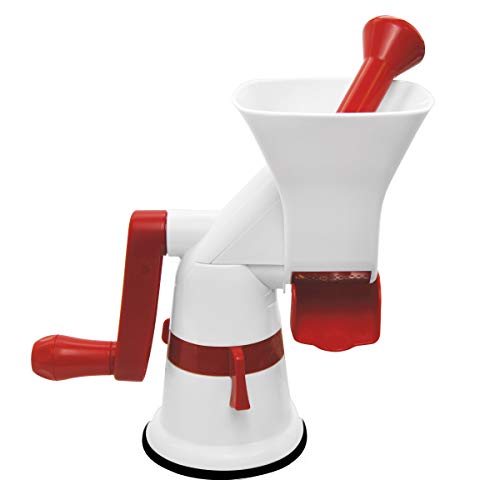
- 3-cup capacity for small batches
- 2mm stainless steel screen
- Auger helps reduce jamming and leaking
Best For: Small-batch sauces, juices, and jams
Best Suction-Mount Option

- Juices without peeling or deseeding
- Suction-cup base for countertop use
- Includes stainless steel pusher
Best For: Fresh salsa, tomato juice, and purees
Best Space-Saving Design

- Aluminum-alloy and ABS construction
- Manual, electricity-free operation
- Compact and suitable for varied produce
Best For: Small kitchens and occasional juicing
Large-Batch Sauce Maker
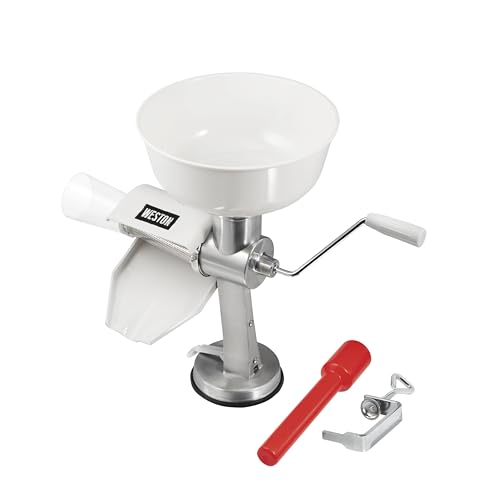
- Separates skins and seeds from tomato pulp
- Extra-large hopper holds about 1 gallon
- Dual suction-cup and C-clamp mounting
Best For: Large-batch canning and produce preparation
Texture-Control Pick

- Three interchangeable milling discs
- Rust-resistant stainless steel construction
- Clamp-on design fits most pots and bowls
Best For: Flexible sauces, purees, and canning prep
Jumbo Hopper Choice
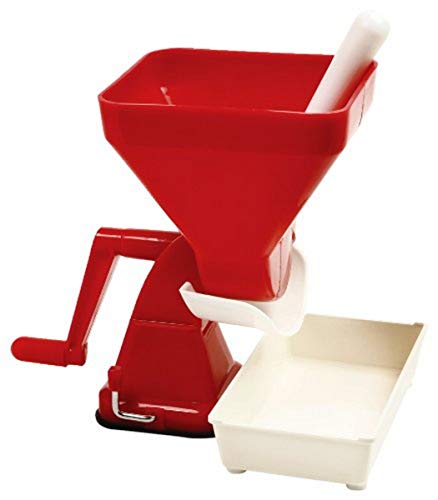
- 2.25-quart hopper for larger batches
- Stainless mesh separates skins and seeds
- Suction base and fitted receiving tray
Best For: Batch tomato sauce and applesauce preparation
Versatile Electric Pick

- Electric tomato straining plus meat grinding
- Includes sausage and kibbeh attachments
- Reverse function and non-slip feet
Best For: Home cooks needing one machine for sauce and meat preparation
Simple Manual Choice
Compact Aluminum Tomato Strainer

- No electricity required
- Separates peels from tomato pulp
- Detachable and compact for storage
Best For: Small kitchens and occasional homemade sauce
High-Yield Manual Pick

- Separates peels and seeds from pulp
- Large feed inlet for fruits and vegetables
- Wear-resistant PP housing
Best For: Manual sauce making with simpler, higher-capacity feeding
Best All-Around Choice – Johnny Apple Sauce Maker
For shoppers comparing tomato presses under 100, the Johnny Apple Sauce Maker is a versatile clamp-mounted option for separating skins and seeds from tomatoes and other produce. It includes a 1.3mm apple/tomato screen and a hand crank, with an optional electric motor available separately.
Best For: Cooks who want one strainer for tomato sauce, purees, juices, jams, and other produce.
Pros:
- Includes an apple/tomato screen, standard spiral, and instructions.
- Clamp fits countertops from 3/4 to 2-1/8 inches thick.
- Supports optional electric-motor operation and additional screens.
- Backed by a stated five-year warranty in the product notes.
Cons:
- The optional electric motor and extra screens cost extra.
- Clamp mounting requires a suitable countertop edge.
- At 4.3 pounds, it is less lightweight than some compact presses.
This is a strong choice when versatility and secure countertop mounting matter more than the simplest, smallest setup.
Best Compact Batch Press – Weston Fruit & Tomato Press
Among tomato presses under 100, the Weston Fruit & Tomato Press stands out for small-batch preparation. Its manual handle, 3-cup capacity, stainless steel screen, and included stomper are suited to making modest amounts of sauce, juice, or jam.
Best For: Home cooks who regularly prepare small batches and want a compact manual press.
Pros:
- Compact 3-cup capacity suits smaller recipes.
- Stainless steel screen uses 2mm holes.
- Auger is designed to help prevent jamming and leaking.
- Includes a stomper for guiding produce.
Cons:
- The 3-cup capacity is limiting for larger harvests.
- Manual winding requires hands-on operation.
- The supplied notes do not specify countertop mounting details.
Choose this Weston model when you value a compact footprint and small-batch convenience over high-volume processing.
Best Suction-Mount Option – Tomato Strainer
This tomato strainer is a practical pick among tomato presses under 100 for cooks who want to juice or puree without peeling, deseeding, or coring first. The suction-cup base helps hold it in place, while skins and seeds exit to the side and juice flows into the tray.
Best For: Gardeners and home cooks making fresh tomato juice, pasta sauce, salsa, or purees.
Pros:
- Separates skins and seeds while juice runs into the tray.
- Suction mount helps secure the food mill during use.
- Includes a stainless steel pusher.
- Designed for straining, juicing, and pureeing tomatoes.
Cons:
- Plastic construction may feel less substantial than metal alternatives.
- Suction mounting depends on a suitable smooth surface.
- The supplied notes do not provide a stated capacity.
Its simple suction-mounted design makes it appealing for seasonal tomato processing, particularly when easy juicing and salsa preparation are priorities.
Best Space-Saving Design – Tbest Manual Tomato Press
For shoppers seeking tomato presses under 100 with a compact manual format, the Tbest tomato press offers aluminum-alloy and ABS construction with a hand crank. It is intended to separate peels from pulp and can also process juices from other fruits and vegetables.
Best For: Smaller kitchens and cooks who want a lightweight, electricity-free press for varied produce.
Pros:
- Uses manual operation without electricity.
- Aluminum-alloy and ABS construction is designed for regular use.
- Works with tomatoes, ginger, vegetables, and other fruits.
- Compact design is intended for easier storage.
Cons:
- The supplied notes do not list a capacity or included accessories.
- Manual cranking may be less convenient for large quantities.
- The product notes do not specify the screen hole size.
This model is worth considering when storage space and flexible, electricity-free operation are more important than documented capacity or included extras.
Large-Batch Sauce Maker – Weston Food Strainer
Weston Food Strainer and Sauce Maker for Tomato, Fresh Fruits and Vegetables ,White
Check Price On AmazonFor shoppers comparing tomato presses under 100, the Weston Food Strainer and Sauce Maker is a practical choice for separating skins and seeds from tomato pulp. Its extra-large hopper, included stainless steel screen, and dual-mount base suit canning, preserving, and other produce-preparation tasks.
Best For: Home cooks processing tomatoes, grapes, and other produce for sauces, juice, baby food, or preservation.
Pros:
- Separates tomato skins and seeds from puree with a 1.5 mm stainless steel screen.
- Extra-large hopper holds approximately 1 gallon of fruits or vegetables.
- Offers both suction-cup and C-clamp mounting for added stability.
- Includes a stomper for applying pressure safely.
Cons:
- Only the tomato screen is included; additional screens are sold separately.
- Uses some plastic resin components alongside stainless steel.
The Weston stands out when capacity and mounting flexibility matter. It is especially useful for larger preserving sessions, while the available screen sizes add versatility for other ingredients.
Texture-Control Pick – Stainless Steel Food Mill
Among tomato presses under 100, this manual stainless steel food mill is a flexible option for cooks who want control over texture. Its three interchangeable discs can produce fine, medium, or coarse results for tomato sauce, salsa, applesauce, soups, and purees.
Best For: Cooks who want one manual mill for sauces, canning, baby food, and varied puree textures.
Pros:
- Includes fine, medium, and coarse stainless steel milling discs.
- Food-grade stainless steel construction is rust-resistant and durable.
- Wide mouth and clamp-on design fit most pots and bowls.
- Dishwasher-safe parts disassemble for cleaning and storage.
Cons:
- Manual cranking requires hands-on effort.
- Designed for use over a pot or bowl rather than as a countertop hopper press.
This model is a strong fit for households that value versatility more than maximum batch capacity. Swappable discs make it easier to adjust results from smooth tomato puree to chunkier preparations.
Jumbo Hopper Choice – Norpro Manual Tomato Strainer
For shoppers seeking tomato presses under 100, the Norpro Manual Jumbo Tomato Strainer is built around efficient batch processing. Its stainless steel mesh separates seeds, skins, and stems, while the 2.25-quart hopper and fitted receiving tray help manage larger quantities.
Best For: Home canners making tomato sauce, salsa, juice, puree, paste, or applesauce in larger batches.
Pros:
- Stainless steel mesh automatically separates seeds, skins, and stems.
- Large 2.25-quart hopper supports batch processing.
- Strong suction base helps secure the unit on smooth surfaces.
- Includes a receiving tray, food pestle, instructions, and starter recipes.
Cons:
- Suction mounting is intended for smooth countertops, tables, or islands.
- Its larger design may require more storage space.
The Norpro is appealing if throughput is a priority and you have a smooth surface for the suction base. Its generous hopper and receiving tray make it well suited to sauce-making and harvest-season prep.
Versatile Electric Pick – Heavy-Duty Tomato Sauce Press
If you want tomato presses under 100 that can handle more than sauce, the AIRMSEN combines tomato straining with meat grinding, sausage making, and kibbeh preparation. Its electric motor, tomato strainer kit, and reverse function make it a practical multipurpose option for busy home kitchens.
Best For: Home cooks who want an electric tomato press that also functions as a meat grinder and sausage maker.
Pros:
- Combines tomato sauce processing with meat grinding, sausage making, and kibbeh preparation.
- Includes a tomato strainer kit and three grinding plates.
- Reverse function helps clear jams, while non-slip feet improve stability.
- Detachable parts simplify cleanup and storage.
Cons:
- Hand washing is recommended; it is not dishwasher safe.
- Its larger, multifunction design may be more than needed for occasional sauce making.
- The supplied notes list both 2500W peak motor power and 300W wattage, so buyers should verify the exact electrical specifications.
The AIRMSEN is the most versatile choice here, especially if you regularly process meat as well as tomatoes. Choose it for multifunction performance rather than a dedicated, compact tomato press.
Simple Manual Choice – Compact Aluminum Tomato Strainer
Among tomato presses under 100, this manual strainer is a straightforward option for cooks who prefer hands-on sauce preparation. Its crank-operated design separates tomato peels and pulp without electricity, while the compact, detachable construction supports easier storage and cleaning.
Best For: Budget-minded cooks who want a compact manual press for tomato sauce and other vegetable juices.
Pros:
- Manual operation requires no electricity.
- Designed to separate tomato peels from pulp for smoother sauce.
- Can also process ginger juice and other vegetable juices.
- Detachable design and compact shape make cleaning and storage easier.
Cons:
- Manual cranking requires more hands-on effort than an electric model.
- The listing does not specify included accessories.
- Its aluminum and ABS construction may feel less heavy-duty than a larger dedicated machine.
This is a sensible pick when simplicity, low power use, and small-kitchen storage matter most. It is better suited to modest batches than to users seeking automated, high-volume processing.
High-Yield Manual Pick – Stainless Filter Tomato Press
For shoppers comparing tomato presses under 100, this manual juicer focuses on efficient straining with a stainless steel filter and roomy feed inlet. It is designed to separate peels and seeds from pulp while keeping the operation simple and relatively easy to clean.
Best For: Home cooks who want a manual tomato juicer with a stainless steel filter and larger feed opening.
Pros:
- Stainless steel filter separates peels and seeds from the pulp.
- Large feed inlet can accommodate more fruits or vegetables.
- Simple structure supports convenient cleaning and energy-free operation.
- PP housing is described as wear-resistant and durable.
Cons:
- Manual operation requires physical effort.
- The listing does not specify included components.
- Although machine-wash care is listed, buyers may still want to confirm compatibility for each part.
The stainless filter and large feed opening make this a practical dedicated tool for homemade sauces and juices. It offers a good balance of simple operation and useful capacity without adding electric-motor complexity.
How We Picked the Best Tomato Presses Under 100
We focused on the features that matter most when processing tomatoes and other soft produce: how effectively the tool separates skins and seeds, how much food it can handle at a time, how securely it operates, and how simple it is to clean. The selection includes compact manual presses for occasional batches, sturdier food strainers for preserving, and an electric machine for shoppers who value speed and reduced hand effort.
We also considered construction materials, included screens or milling discs, mounting style, versatility, and the practical trade-offs of each design. At this price, buyers should expect differences in capacity, durability, and convenience rather than identical performance.
Quick Comparison
- Best for occasional use: Compact manual strainers and food mills are affordable, easy to store, and suitable for small batches.
- Best for preserving: Clamp-based and larger-capacity presses provide more stability when processing garden harvests.
- Best for versatility: Food mills with multiple discs can handle sauces, soups, purees, and some other soft foods.
- Best for speed: An electric strainer or grinder-style machine reduces repetitive cranking during larger jobs.
Key Buying Factors for Tomato Presses Under 100
Manual or Electric Operation
Manual presses are generally quieter, simpler, and easier to store, but they require continuous cranking. An electric model can save time and effort for large batches, although it typically takes more counter space and has more parts to wash.
Capacity and Batch Size
Check the hopper and collection capacity, not just the overall dimensions. A small press works well for dinner-sized sauces, while a wider hopper and larger output area are more convenient for canning or processing garden tomatoes.
Construction and Stability
Metal components can offer better rigidity and longevity than lightweight plastic, but they may add weight and cost. Clamp-style bases need a compatible, sturdy counter edge. A stable press is safer and produces more consistent results than one that shifts while cranking.
Strainers, Screens, and Milling Discs
Some tomato presses use a dedicated screen, while food mills include interchangeable discs. Finer screens usually create smoother puree; coarser options may leave more texture. Confirm what is included and whether replacement parts are available.
Cleaning and Storage
Look for removable components and smooth surfaces with few crevices. Before buying, verify whether parts are dishwasher-safe and whether the press can be disassembled without tools. A compact design is more likely to be used regularly.
Who Should Buy Which Tomato Presses Under 100?
Choose a compact manual strainer if you make fresh sauce occasionally and want the lowest-cost, easiest-to-store option. Choose a clamp-based press if you process repeated batches and want a secure workstation setup. Choose a food mill if you want one tool for tomato puree, soups, baby food, and soft cooked vegetables. Choose an electric model if speed and reduced arm strain matter more than quiet operation or compact storage.
For most shoppers, the best tomato press is the one that fits the typical batch size and can be cleaned quickly afterward. Compare mounting requirements, included accessories, and replacement-part support before choosing among these Tomato Presses Under 100.